Showing posts with label courage. Show all posts

Tuesday, June 25, 2013

Bernie Mac and the Inordinate National Concern

The real Bernie Mac
Stepping off my connecting flight from Kansas City to Charlotte, NC en route to Cleveland, I entered the men's bathroom to perform my necessaries. As I made my way through the door, I almost froze with shock as I thought I was looking at Bernie Mac (God rest his soul) or a very close relative of his. From crazy hair to comical smile, I was certain that he could've made a career being a Mac-alike. It hadn't occurred to me why he was there in his airport uniform, but I made my way to the urinal to fulfill my purpose.

Then, the man who looked like Bernie Mac began to talk to the patrons of the men's restroom. "How are you all doing today? Early? Man, you've gotta wake up with a smile! Since 4 am? Well, I was up by then too! I just want to see everyone smile. How're you doing, sir? I'm good, I'm good, I don't complain. Because nobody listens. How're you doing, sir? Oh, can I help you with that? Don't want you to have any trouble carrying anything and hurting yourself! Alright, alright..." Without trying to be too gratuitous with my details, this sort of upfront chatter was making my bladder very shy, standing before the urinal.

Was the airport paying this guy? It all seemed very invasive and awkward, since the unspoken rule in men's bathroom is that everything should be left unspoken. I was reminded of my similar apprehension when I was pulled aside twice to have my bags checked before getting on to my previous flight. I had been immediately uncomfortable at the thought of being poked and prodded like you hear on all the news stories. Gee, couldn't Bernie Mac just stop talking and let a guy tinkle in peace? I half-expected him with his overly-enthusiastic attitude to give ever man trying to take a whiz in the row of urinals a hearty "good game" butt slap to encourage excellent urination.

This man's identity has been cleverly concealed
by the photographer's crappy iPhone camera
Speaking of the news, I never watch it, but the airport TVs were full of them, all playing one news program or another. The interesting thing was that they were all national network news programs: not local new. National news has absorbed the consciousness of many people. From the presidential elections to the latest disaster, everyone wants to know what's going on around the country. What is Congress fouling up now? How's the stock market doing? What's the latest news with big business? While waiting for my second plane, a man standing in the middle of the gate's sitting area spoke loudly about his company's business strategy and expansion plans, as if to make a big scene of his importance. It was quite comical, and I even snuck a picture, but he seriously was wholly absorbed with global business.

This, I think can be applied to the Hollywood scene as well. Programs like TMZ have made all kinds of money off of gossip and scoop stories on the lives of the "rich and famous". Some people follow their lives more closely than they follow those of their children. America is obsessed with the celebrity scene and any latest juicy, chewy piece of fat to fall from the tables of the mass media is enough into a frantic feeding frenzy and bring us back, begging for more.

I think this even ties into something I was recently having a discussion about regarding "philanthropic" endeavors, especially those worldwide. Wiki-pedia defines "philanthropy" using the notion of enhancing "what it is to be human". Does anyone doing "philanthropy" know what it means "to be human"? And why do these efforts always seem to happen in Africa or some disaster stricken area? What's wrong with right here, in my neighborhood?

These three things all have a common source: an inordinate global concern and a dangerous unwillingness to take personal responsibility for ourselves and our own community. Those who contribute to the alleviate "world hunger" often fail to alleviate the very real pains and struggle of their friends, family, and the needy of their own community. Philanthropy is opposed to true charity, as it seeks to draw attention towards "real world" needs... and the efforts of those who make them. More often then not, my experience has been that philanthropy is a feather in people's caps, and not a nail in their hands and feet like charity is. Anyone can give money to feed the kids in Africa and feel like they did their good deed, but can you give a hug to your mother or father, or a helping hand on your brother's homework, or an hour or two helping your grandparents rake the leaves in their backyard?

We consume the celebrity gossip because the moral missteps of the accomplished and powerful make us feel better about our ethically bankrupt lives. In this same vein, it allows us to neglect our own areas of deficiency, so as not to expose what the level of self-knowledge we lack. We absorb this information because it counts as entertainment to hear about the scandals, the divorces, the political opinions, and the drama; but really, seeing this a source of entertainment helps to placate our own nagging consciences about the miserable and messed-up lives we're leading. In many cases, our lives are not any better than those of Hollywood. We just count ourselves lucky that they're under that kind of scrutiny for our entertainment and comforting, and we're not.

People focus on national or global political "issues" because they can remain anonymous about them. We can scream at our televisions at home, and not need to bring our concerns in front of an actual group of people. Mass media and social networks have allowed the citizen to be anonymous in his opinions, never needing to have the courage to risk his identity to stand up for his beliefs. I do believe that our nation is in a very dangerous time with the liberties that have been taken at the national level, but let it not be an excuse to neglect valuing our own local government and business success.

So, do I place my own life into consideration and determine what things I need to change? Do I treat those immediately around me with love and kindness, because "charity begins at home"? In what ways do I look to be a force for the common good of those within my neighborhood or community by setting a personal example for others?

I know I'm asking these questions, but to be honest, I hadn't really thought of an answer because Bernie Mac was still talking and I still couldn't pee yet.

Monday, May 6, 2013

Great Deeds and Noble Hearts: A Musical Revolution

Remember those stories that had you fill in key words or phrases to create a totally random and hilarious story? It'd typically go something like, "This morning, I woke up to the sound of a     (noun)     while I was dreaming about     (an activity you hate doing)    ..." You would ask a friend to give the your necessary words or phrases without telling him or her the context of the words. When you were finished, you'd read the short story from beginning to end and have a good laugh over it.

I bring this up because I was thinking about what kinds of answers would fill in the blanks if modern popular music provided the answers. Probably something like this:

I was awoken this morning by    tik tok, on the clock, but the party don't stop no   , after a long night of    livin' a Teenage Dream   . I put on my    ripped jeans, skin was showin'    before going downstairs to have some breakfast. Next thing I know, I'm    gonna pop some tags, only got twenty dollars in my pocket   , but before I do, my mom says to me, "   HEYYYY, SEXY LADY!!!!   ".

Ok, maybe this is a silly exercise, so are these lyrics. Although the truth is that you could do this to Shakespeare and he'd look pretty comical, the point is that these are the things were hear from popular music and have been for a very long time.

PSY performing "Gangnam Style"

However, I am sensing a shift in the preferences of a growing portion of today's music lovers, and it's exactly because the younger generations are realizing that life isn't about the instant gratification anymore. They've been there, they've done that for long enough and they're finally over its glamor. So how is this reflected in musical tastes?

Whatever is "popular" appeals to a baser part of our souls. People choose what is "popular" not because it enriches them; rather one chooses what is popular because it is in keeping with the status quo. Since "everyone is doing it", no one is going to criticize or attack your for doing it yourself.

Sometimes, though, this conception of "popular" wavers and falters under the underestimated strength of the human heart. Sometimes, a truthful light shines through and those who are open to it gather around it. I believe that some interesting trends in contemporary can be seen in this way: as encouraging and cultivating inspirations of what we all truly long for in the deepest desires of our hearts.

Someone Like You by Adele on Grooveshark
The first expression of such a longing is in hurt. Artists such as Grace Potter and the Nocturnals and ADELE come to mind here. The primary subject matter of their songs center around themes of sadness, hurt, and loneliness. Broken and shattered amidst the heartbreak in the world, this music expresses confusion and laments, "I often think about where I went wrong, the more I do, the less I know." ("Don't You Remember" - ADELE, click here for full lyrics) Living the disillusioned life has indeed brought about this pain because the indulgence in what is "popular" has promised the maximum pleasure, but only delivers the deepest, cutting pain. This hurt is always present in the shame at who we have become and what we have sacrificed, "'Cause every town's got a mirror and every mirror still shows me, that I am my own ragged company." ("Ragged Company" - Grace Potter and the Nocturnals, click here for full lyrics)


Ragged Company by Grace Potter and the Nocturnals on GroovesharkThese artists and others have become "popular" because they speak for the hurt and shame that we all have. Their appeal is in their lamenting that we can all identify with. Though it would be a mistake to believe that one day, this is all the world will listen to, this is what a large number of people are gravitating towards because 'misery loves company', and these artists make explicit what lives implicitly in all of our broken souls.


Sigh No More by Mumford & Sons on Grooveshark
Acknowledgement of one's misery is the first necessary step, but even more imperative is the discover of our innate desire for the good and the willful resolution to obtain it. Florence + the Machine and Mumford & Sons rank among the most popular influences on this genre which encourages people to be "more like the man you were made to be." ("Sigh No More" - Mumford & Sons, click here for full lyrics) It's true, these songs are about pain and hurt, but their defining characteristic is not in complaining to the world about endless woes. Courage is necessary to carry on after being let-down, the ability to pick up the pieces and find peace in carrying on. This kind of music has gained significant popularity because the listener it attracts is "done with [her] graceless heart, so tonight [she's] gonna cut it out and then restart." ("Shake It Out" - Florence + the Machine, click here for full lyrics)

Though we must not fool ourselves into thinking that because a few artists are gaining some traction in popular culture, the whole world will suddenly embrace this truth and desire for the full meaning of our lives, but what I think it does mean is that there is a growing number of people out there who are realizing that their lives have purpose and they are called to acts of heroism and virtue.

A calling to deny those passions that come so easily to us and ascend to lives of greatness and meaning is the heart's true desire. "Party rocking" and living "gangnam style" feed the body, but they leave the soul starving for sustenance. Pop culture is popular and will remain so, as long as it feeds our vices and encourages our lukewarmness. But life's true adventure is proving to ourselves, even when no one is watching, that we were made for great deeds and noble hearts.

Saturday, April 13, 2013

You Are What You Hear...

Plato from "The School of Athens"
In Book III of Plato's Republic, Socrates and Glaucon discuss the role and content of musical compositions to be included in their fictional, utopian polis. The beginning of this topic involves them throwing out all bad or unhelpful forms of music in an effort to preserve those that will be good for the polis as a whole.

He correlates/compares particular modes of music with particular activities. For example, lamentations have a particular mode that imitates a sorrowful person. Other modes can be associated with drunkenness, idleness, and softness. Still others are associated with battle and courage. When confronting the question of why music selection is so important in the polis, Plato claims that "rhythm and harmony permeate the inner part of the soul more than anything else," and that the music will inform the souls of the city's people as much as an academic education can.

Plato also believes that music is instrumental in aiding people to determine "goodness". People very familiar with good forms of music (and poetry) will be able to "sense it acutely when something has been omitted from a thing and when it hasn't been finely crafted or finely made by nature." Essentially, that person will be better equipped to discern right from wrong, simply by having an education in good music. A harmony of soul will allow the person to reject those things that jeopardize that harmony.

Ok, wait, seriously? Does this mean we have to listen to Christian rock all the time or classical music? While I, personally, am a strong advocate for tuning in to classical music regularly, I do not think that's what we should be taking away from this point.

It's practically scientific fact that certain types of music affect our moods, and this makes perfect reasonable sense because we all have our happy playlists and our angry playlists, right? So this shouldn't be too crazy.

James Hetfield of Metallica; Exhibit A of Musical PTSD
However, prolonged exposure to a particular kind of music can have lasting effects. Similar to post-traumatic stress disorder (PTSD), listening to a single genre can influence your nervous system and hormones in such a way that they create semi-permanent conditions, just like constant shelling and gunfire. For example, listening to only grunge and other forms of hard rock can acclimate your body's hormones to stressful levels, regardless of if you are listening to music at that moment or not. The music conditions your body to release hormones that induce stress and adrenaline into your system. If the exposure to this music is regular, then the stress hormone release is also regular until it becomes the norm, whether you are listening to the music or not.

So, now the question I always want to know the answer to: what would the virtuous man do? What music would the virtuous man listen to? Well, the answer is not as easy as pointing to one particular artist/band or even one particular genre. And it certainly is not found in listening to the 10 hour version of Trololo (I think that if you can make it through 10 hours of this, you'll be a master in the virtue of fortitude, but I'm sure your prudence would be sharply called into question). So where is it?

To be a good person, one must do good things, eat good food, have good friends, etc. No good man will desire to surround himself with evil because he only delights in good things and everything less than that is abhorrent to him in varying degrees. So if goodness is to permeate the virtuous man's life, this must also apply to listening to good music. Therefore, our next inquiry is to discover of what things good music consists.

I am not necessarily referring to the gospel group, Virtue,
(above) when I refer to "virtuous music"
Just as food contributes to the goodness of our bodily health, music contributes to the health of our mind. The saying, "you are what you eat," applies just as much to music as it does to food. If certain kinds of food create unhealthiness in your body, then you will become unhealthy. If certain kinds
of music create unhealthiness of the mind, as described above, then the mind will become unhealthy. We care about the health of mind and body because it is integral to the soundness of one's soul. Our minds and bodies enable us to live virtuous or vicious lifestyles, and those lifestyles inform our character and, ultimately, our souls. Just as a hammer without a sufficient grip on the handle is unwieldy and inept at performing its task, we too will be inept at living a properly good life if our bodies are disordered.

So if music is so important to the health of the soul, we probably should pay a lot of attention to what good music is, so as to properly nourish our souls. Good music consists of that which brings us to realize our human good, namely virtue. After agreeing in the above paragraph that music does have an effect on the soul, it stands to reason that it must have either a positive or negative effect. And since "the good" is the aim for all of our actions, why would we ever desire to listen to "bad" music? (Note: by "bad", I am not referring to poorly performed or untalented music; I am referring to music that deteriorates the mind and corrupts the soul)

Music informs our minds and souls, just as the rhythm of a drum cadence informs a marching army to march in step. In the case of the human soul, good music is going to be that which inspires virtue in the individual. It lifts man's heart and mind to higher things and inspires him to perform heroic feats in everyday life. In times of struggle, it must comfort and console him, but always encouraging him to keep his goals of character firmly fixed. Music moves the human heart, and for the man who aspires to virtue, it must always move him towards his goal of being the virtuous man.

Therefore, good music inspires and directs man's desires, will, and actions to the achievement of virtue, and therefore, this is the best kind of music.

And now, here's a small sample of music that inspires me personally to virtue!

The Cave by Mumford & Sons on Grooveshark
Born to Run by Bruce Springsteen on Grooveshark
Overture To The Royal Fireworks Music by Handel on Grooveshark
The Breaking of the Fellowship / In Dreams by Howard Shore on Grooveshark


Sunday, February 10, 2013

The Dangers of God's Grace

Since middle-school, I had been very fond of swimming, particularly racing. I prided myself on being the fastest free-style and backstroke swimmer on the team, and winning first place in races was a common occurrence. One meet, however, the coaches had signed me up for my usual free-style and backstroke events, but also on my list of race events was the butterfly stroke race. This was a problem: I had never swam butterfly.

Sure, we had done some practice with it, but I never possessed the proper coordination to make it more than a few meters before I was doggie-paddling. I approached the starting blocks, shaken with fear of not only losing the race, but possibly not even finishing. Silently, I prayed to God that I should at least finish the race, let alone not drown in my attempt.

I not only finished, but I earned first place. It's difficult to convince anyone that the occurrence of this result was a miracle, but to me, it's profoundly clear that it was. Whatever grace I received was accompanied by the unsettling fear of failure before and a consequently very sore and worn-out body afterwards. In this instance, God's grace had been a painful experience.

"The Calling of the Apostles Peter and Andrew"
by Duccio di Buoninsegna
Today's gospel provides Luke's account of the first meeting between Christ and Peter. A few weeks ago, I published a post on the struggle with habitual sin and proper contrition for them, and I cited the example of Peter's initial encounter with Christ in the gospel of Luke. They meet on the shores of the Sea of Galilee and Christ instructs Peter to cast out to open water and lower his nets. Peter, having caught nothing at night, remained doubtful with the success of this course of action, but he acquiesced anyway. Once the nets had been lowered, the catch of fish was so great that their nets began to tear and even with the help of a second boat, they were both in danger of sinking.

First, receiving God's grace only takes a simple "yes". Peter's dubious "yes" led to an incredible catch of fish. Mary's simple, yet perfect "yes" opened her to the conception of the very Son of God. On the mountain, the young boy's "yes" to providing the few loaves and the fishes he possessed led to the feeding of five thousand people with some to spare. Our gifts may be small, but in cooperation with God, miracles become possible. Most people have heard of this aspect of God's grace (or have experienced it for themselves). It is definitely a wonderful blessing to realize this and acknowledge it in our lives.

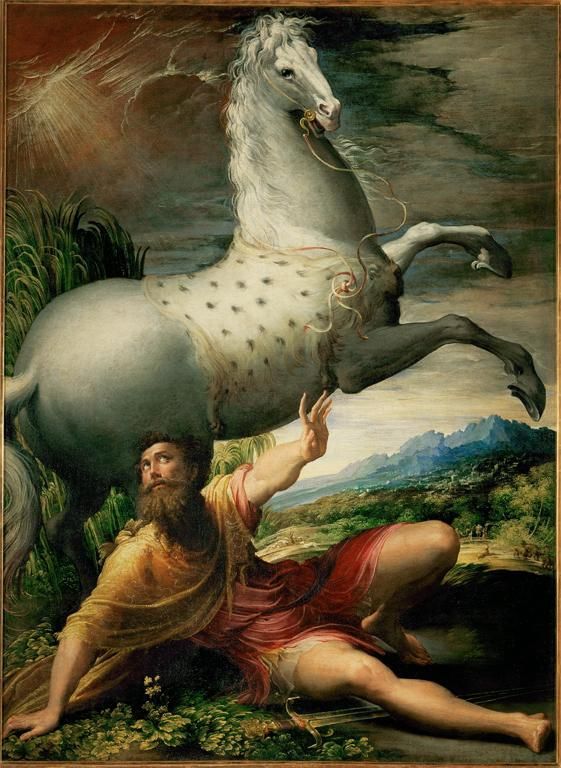
However, what you don't hear is that sometimes, God's grace may nearly kill us with its intensity. In the today's second reading, Paul refers to his conversion story of being cast off his horse simply at the sound of Christ's voice, and in the Gospel, Peter and his fellow fishermen nearly drowned as a result of an incredible catch of fish. In both circumstances, God's grace manifested itself in violent, threatening ways. These accounts challenge a common notion that God's grace is always quiet or subtle because sometimes, the furious power of God's grace comes to us in these "life(style)-threatening" situations.

Focusing on the Gospel account, the fishermen's nets were tearing, the boat was capsizing, and the human help of the second boat could not even alleviate the sheer enormity of God's grace. Similarly when we encounter His grace, the nets of our vices will be torn through and our lives, it seems, will be in danger of sinking and drowning. The manner in which we have allowed ourselves to just "float" through life will be shaken to such a degree that in order to be set right, we will be confronted with the reality of that very real danger of death to our lifestyles, If we're open to it, God's dangerous graces will "kill us", but our death will be a "death to self" and our rebirth will be in His divine love. Our sins and depravities will be put to death and all that will remain is our charity. 

"The Conversion of St. Paul" by Francesco Mazzola
So why is God's grace sometimes so violent in this fashion? Grace must necessarily purify us. In today's first reading, Isaiah had a hot coal placed on his mouth. In the second reading, St. Paul was cast from his horse and blinded. In the Gospel, Peter's physical strength fails him and even with the help of his companions, he is filled with fear of a drowning death. Each of these men were flawed and each received the cleansing gift of God's grace. However, just as Purgatory prepares us to see God face to face by a painful purification, God's grace to these sinful men is so great that in their fallen nature, they perceive it to be painful. To eyes that have never seen the sunlight, even the slightest ray of sunshine is blindingly painful, but once the eyes become accustomed to the goodness of the illumination around them, they rejoice at that purifying grace which was once excruciating.

How often do we allow ourselves to experience this fearful level of grace in our lives? Do we shirk away from it for fear of braving the danger to our lifestyles? There is a significant amount of dying-to-oneself that we all need to do in our lives, and if we avoid this death, we will always be devoid of God's greatest graces and blessings. But if we are open to that painfully purifying grace in our daily lives, we are given a blessed opportunity to suffer with the Suffering Servant, the Crucified Christ.

Wednesday, February 6, 2013

The Lost World of Children

"BOYS! Look away!" my mother said, sternly.

Immediately, I obediently scrunched my eyes shut and turned my face to my skinny, boyish legs. I wasn't missing anything important, my mom would always tell me. Sometimes, I would become curious and try to catch a glimpse, but Mom would have none of it. She made sure that each of the boys had their eyes shut and faces turned away.

A brief moment later, the passionate kiss between the film's main characters had ended, and I was allowed to resume watching.

A kiss? Seriously? Were you home-schooled or something? That's nothing compared to the other stuff out there!

Yes, it was just a mildly zealous kiss between a man and a woman, but I thank God every day for the first woman who taught me to value affection and guard my heart. It's true, I have not always been good at it. I have never stopped trying though, hoping one day to return to that childlike innocence.

Can one reclaim that innocence that we sacrifice over age and experience? In Genesis, Adam and Eve ate of the Tree of Knowledge of Good and Evil. They did so willingly because their pride directed them to challenge the only restriction that God placed upon them.* So after their sin, could Adam and Eve re-enter the Garden of Eden? Could they return to the paradise of blissful innocence? No, they could not, and because of original sin, neither can we. There is no going back, and what is gone is gone now for good.

Last weekend at Mass was Scout's week, and before the Final Blessing, the pastor distributed a good Christian award to 15 young Cub Scouts for completing the merit requirements. The boys, no older than 10 years old, processed from their pew towards the front to the side of the sanctuary, but as they did, I noticed that the last boy was wearing jeans that had the pant hem ending awkwardly right above is skinny ankles. No doubt, the poor kid was beginning to hit his growth spurt. And at that instant, my heart wept for him.

In his innocence, he was oblivious to what lay ahead of him. He has no idea that in a short time, his boyish heart will be violated and assaulted by a cruel society, intent on stealing that precious gift. It will be gone forever, and if he values virtue, he will weep for this loss as I do. In that moment, I made a quiet, but urgent prayer for the safety of their hearts, now and in the future. I prayed that they might desire to become virtuous and upstanding men and that this award might be the first step in that direction.

And it's not just for boys that I worry about: I worry for the girls. They will be abused, objectified and disrespected to a degree lower than animals. Any semblance of integrity will be challenged and lost in the hormone-driven high school and college years by the "skin race", an escalation of how much they can bare for a boy's hungry eyes. A frightening thing is that most girls never realize this, but the most disturbing thing is that even if they realize it, they may never have the courage to reclaim their dignity and restore their innocence.

However, I do not believe all is lost with the departure of childlike innocence. St. John in the Book of Revelations writes:
"And I heard a loud voice from the throne saying, "Behold, the dwelling of God is with men. He will dwell with them, and they shall be his people, and God himself will be with them; he will wipe away every tear from their eyes, and death shall be no more, neither shall there be mourning nor crying nor pain any more, for the former things have passed away." And he who sat upon the throne said, "Behold, I make all things new." (Revelation 21:3-5).
Christ has taken what was, and he has fulfilled it and glorified it. He took a human body, made filthy and a vehicle for immorality by Man, and glorified it in the Resurrection. He took on a human heart, made bitter and selfish by Man’s sin, and glorified it, making it an eternal model of perfect charity. Christ makes these things, and all things new and better. Therefore, it is Christ who has made our innocence new.

With that statement, two things are important to realize. First, this is not something we can do alone, for Christ works on this through us. This innocence is a unmerited gift that God gives to those who are open to receiving it. Therefore, its attainment is not directly related to any effort that I make to achieve it; rather, my effort to remain in God’s holy grace and foster a real relationship with Christ is what will open me to this gift.

Second, because our childlike innocence is made new and glorified by our struggle, it is better than the innocence of the child. Just as the resurrected body is more perfect than our sinful body, the glorified innocence renewed by Christ is more perfect than that given to Adam and Eve in Eden. This is because we have chosen it for ourselves and the longevity of this resolution, through struggle and toil, confirms this choice with greater glory and rewards, both temporal and eternal.

It will always be a challenge to every man, young or old, to seek and find that holy innocence renewed by Christ, but once discovered, it will chase away our fears, replaced by a lasting peace that we will carry with us  until our deaths and into Eternal Glory.

Monday, February 4, 2013

Schedule Killed the Action/Adventure Star

I use Google Calendar every day. It's incredibly handy and helpful, and all my appointments and events are on there. With alerts, I can be reminded of events that I might otherwise forget. I have separate calendars for my different kinds of events (birthdays, fitness training, etc.) The plethora of different views allows me to see my schedule in any way I might (or might never) want.

I hate Google Calendar. And any kind of calendar/schedule-maker that is easy to use. If it's easy to use, people will use it, and with calendars and schedule-makers, that just won't do.

The Face of Boredom
When you have a schedule, you subtly believe you know what is going to happen during your day. You set the events of your day and you move from one appointment to the next, one task to the next, and one pre-planned moment to the next. It's true that society could hardly function without schedules, but it's just a cultural symptom of our obsession with productivity and efficiency.

This is bad for two reasons: First, because your day is "planned", nothing new or exciting can happen. You know the sequence of events (in fact, you have determined most of them). You become the ultimate master of your own destiny and therefore, there are no surprises.

Second reason: how mind-numbingly boring is that? The chief problem afflicting our culture today is not poverty, hunger, or filthy interstate rest stops... it's boredom. When we use a schedule to line up every minute detail of their days, weeks, years, and lives, we perpetuate this heinous evil and rob ourselves of engaging stimulation.

Maybe each day feels the same because they ARE the same.
"Well, what if there is no tomorrow? There wasn't one today."
For most people with schedules, each day feels exactly the same. It's like you know what's going to happen tomorrow. In corporate America, a select few people have truly exciting jobs, but for the rest of us, it can be a drudge. If you're expecting  the same unexciting day as yesterday, what are you looking forward to? Tomorrow will come and go, and you might ask yourself why do you really care?

Maybe we like schedules to feel in control of our lives. In an effort to be certain of as many things as possible, we plan our lives as a sequence of calender events and appointment invites. It's like giving someone a wrapped gift that you picked out. They may have no idea what's inside, but you do. For that reason, there is no surprise for you. Imagine always giving people wrapped gifts and never receiving one yourself.

What is this ultimately taking a toll on? Reliance on schedules negatively affects our ability to be spontaneous and adventurous that romantically invaluable skill. Imagination is the heart and soul of spontaneity. A common error is to believe that one must be erratic or impulsive to be spontaneous. However, it is imagination that gives the human soul the agility to be spontaneous. But there are few things that kill imagination, and consequently spontaneity, more than pre-planning your life and relying on rigid structures. Consequently, we become slaves to our schedules, both self-imposed and imposed from the outside.

Spontaneity also has a profound influence on one's courage. When an unexpected opportunity or challenge arrives, our ability to rise to it will be diminished, just because it does not fit into whatever we expected. Life is meant for action, and courage is what enables us to take appropriate action in any circumstance. Without courage, we miss out on life's rewards. Life is not always pre-canned or predetermined, and the most critical moments in life are usually those ones that are not planned or expected. Most of us don't need to chase after tanks on horseback or stop an alien invasion or escape from an island of genetically-engineer dinosaurs to satisfy our spirit of adventure and test our courage (if you do, you might be a fictional character), but that courage and adventurousness needs to be reclaimed.

Seize the moment. Push yourself to heroics. Do not settle for blindly following the established order, and do not be afraid to throw the schedule out and blaze your own trail!

I'll bet Indiana Jones didn't schedule this... and he turned out just fine.

Sunday, January 20, 2013

“Smells ‘n Bells” VS “Drums ‘n Chums”


As a Roman Catholic, I have been to many Masses in my lifetime. The majority have been your typical, run-of-the-mill parish Sunday Masses or your quick daily Masses, but I’ve also been to youth Masses, Novus Ordo Latin Masses, Tridentine (Pre-Vatican II) Latin Masses, and even Masses involving people collapsing into tears and wailing after receiving Communion.

That being said, I would like to discuss what I perceive to be two different “styles” of the Holy Mass. The first is one I’ve referred to here as “smells ‘n bells” (which alludes to the frequent use of incense and the bells that are rung at the moment of the Consecration), which one might consider to be orthodox. A Latin Mass is a perfect example of a “smells ‘n bells” Mass, but many vernacular Masses will also neatly fall into this category. Each piece of music is referred to as a “hymn” and the primary instrument is the organ. With these details, I am assured that the reader has been to a Mass of this sort before, so I will not spend any more time on describing it. For brevity’s sake, I will hereafter refer to this as the solemn Mass.

Blessed Pope John Paul II at World Youth Day
Second, there is the style of Mass that I refer to as the “drums ‘n chums” Mass (which refers to the frequent use of rock drums sets and the emphasis on the community of those in attendance). The style is largely attributed to the influence of Blessed Pope John Paul II and his institution of World Youth Day. From what I know of its history, the youth Mass was a method to attract young people who had no firm foundation of faith to the sacrament of the Eucharist. Thus, its execution is less conservative and of a higher energy. Guitars and drums belt out songs that focus primarily on the greatness of God and worshiping him. I will define this and refer to this as the youth Mass.

Most of the time, the style in which Mass is celebrated is a blend of these two and most people have a preference for one style over another, but it is my perception that a large number of faithful Catholics have strongly critical opinions about one or the other. Of the solemn Mass style, people say that it is too boring which makes it difficult to pay attention. Another frequent complaint is that the priest’s homilies are too difficult to follow or contain content irrelevant to them. Of the youth Mass, common criticisms are that the Mass becomes more like a social hangout spot where kids go to see their friends instead of going to receive Christ. Also, the sign of peace lasts fifteen minutes and everyone is so "touchy-feely".

So which is better? The goal of faith is to increase in it. Ultimately, the more faith we place in Jesus Christ as our Lord and Savior, the better our lives will be and the better life after death will be. Anything that keeps us from increasing our faith must be discarded and a solution to this blockage should be discovered.

It is no mystery to any observant Catholic that generations of Catholics since the 1960’s have been without firm foundations for faith. John Paul II saw this crisis around the entire world, so he began World Youth Day to draw the youth of the world to Christ, and the concept of the youth Mass spun off of that. Had the Church said, “Well, we really can’t do anything for these people because that would involve adapting the Mass and our approach towards apostolate to a degree we’re not comfortable with,” that would have been an obstacle to the Church’s increase in faith, and an evil.

A youth Mass
The youth Mass has to attract young people, while staying true to its purpose. Why is the youth Mass emotionally appealing? For many people with emotional baggage, there are significant obstacles from their past lives that have to be overcome before a deep faith can be achieved. It is OK to be on fire with Christ’s love, after all. Why does the youth Mass seem to place an emphasis on relationship with one another in community? Many people are unaware of the unity of the Body of Christ, made up of the members of the Church. Society encourages individuality and rejects community, so it's very important that people realize that they are part of something bigger and more amazing than just them. Also, emphasizing healthy, virtuous relationships with one another is a step towards fostering a close, loving relationship with Christ.

However, many youth Mass attendees that I have known stop there. They get into a routine of going to youth Mass every Sunday and hearing the music and seeing their friends, but they do not look inward to discover if there is anything more that they’re missing. Truth is, they’re missing 2000 years of Church history and tradition. They could be missing doctrine and teaching on Mary, the lives and writings of the saints, and the other sacraments that are vital to a flourishing life of faith (just to name a few). They stay where they’re at because they are comfortable there and no one tells them otherwise. This is also an obstacle to the Church’s increase in faith, so it is also an evil.

Tridentine Mass
A return to the solemn Mass is the answer. The solemn Mass moves beyond the secularly appealing aspects of the youth Mass and focuses intently on deep theological truths of our faith. These truths are by no means those you would only find in a PhD theology program; rather, they are those deep aspects of Christ, His Mother Mary, and His Church that we are called to contemplate. The solemn Mass removes the guitars, drums, buddies, and girlfriends, and places the individual in a chapel with a monstrance containing the Blessed Sacrament, alone in mental prayer and Adoration. Ultimately, the Mass is meant to draw us to Christ and, in doing this, to one another; not the other way around. The Church allows for the secular noise to which we are accustomed with the hopes that in a desire to grow more deeply in faith, we will cast off the training wheels by doing things like spending Holy Hours with the Blessed Sacrament, reciting the Rosary, and going to silent retreats for contemplation.

The solemn Mass fulfills the purpose of the youth Mass. It is a channel through which we may pass in our relationship with Christ that speaks to us in terms that we are initially comfortable with. As our desire to more fully know Christ matures, we must also work to mature our faith and contemplate those deep mysteries of the Divine Love.

Graphic Credits:
catholicseeking.blogspot.com
becketyouth.org
traditioninaction.org
sttimothy.pipertechnology.com

Monday, December 10, 2012

Fight to the Death

A few days ago, I watch the 2012 film, "The Grey", starring Liam Neeson and directed by Joe Carnahan ("The A-Team"). It's the story of a former special forces soldier, now working for oil pipeline company in Alaska/Canada, whose plane crashes in that region leaving only him and a few others as survivors. Together, they must brave the cold, the hunger, and the pack of nearby ravenous wolves that seek to pick the off, one at a time. A quick glance at the synopsis might not interest you immensely (it didn't interest me), but upon seeing the film, it felt more like a horror-thriller film than a boring "Cast Away" survival film. It was a very frightening film, but one, I believe, that offers a happy, through realistic ending with an emotional soundtrack and stunning snow-capped, evergreen visuals to match.

I do not usually cry during films (why should I? I'm a man). I used to just get caught up in the moment of "wow, this is an awesome scene!" and that was the extent of my excitement. But there are a few elements of cinema that, if properly portrayed, bring free-flowing tears to my eyes. One element of which is the notion of fighting to the death. I will not explain exactly how this relates to "The Grey", because I hope that this post will convince you to see an amazing film without giving any revealing details.

A number of films exist in which the "fight to the death" theme exists. A few that spring to mind include "The Lord of the Rings", "Henry V", "Gladiator", "Cinderella Man", and, though no actual fighting occurs, "The Passion of the Christ". It is a concept that is nonexistent in our society because we are so obsessed with immortality and preserving our own lives. The American culture is obsessed with extending life by whatever means necessary. Acceptance of death is considered a disastrous defeat. No matter what the challenge, there is always the hope that there will be a way that we can defeat the threat and still live at the end of it. There has to be a way that we can achieve a "happily ever after" ending where everyone lives, right?


Death comes for us all. Ready or not, it comes for us. People are afraid of death because they do not know what they will find on the other side. It is not a welcome event because if we have lived our whole lives the way we wanted to and not the way we ought to have, then we make a gamble. The unknown of death, whether it be Heaven, Hell, or just oblivion is terrifying to the one without a clean conscience.

When Death does come for us, there is no more running, no more hiding. We have been caught out in the open, ragged and exhausted from our frantic flight and the end is inevitable. What more worthy thing can we do? The film "Gladiator" suggests "Death smiles at us all. All a man can do is smile back".

The only thing we can do is gird our loins and face our darkest terror with courage and resolve. While other men will despair or beg for mercy, a man of true-spirit gathers himself up and stands his ground, despite the challenge ahead. Sometimes, we are afforded a moment of reflection. All options run through our head, and our vain hope that we could make it out of this grim circumstance alive is forever on our thoughts. But after breathing deeply and turning our eyes to our ultimate fate, we realize that there is only one thing to do. At this point, success and failure are irrelevant: our focus has to be on completing the task at hand, mustering all forces of body and soul for this one purpose.

Then comes the moment of clarity. All of the struggle and confusion of this world melts away and there is only one thing that remains: the purpose. It is finally apparent that everything that has happened to you, everything you have endured, everything that has filled you with joy and sadness in your entire life was given to you to prepare you for this moment. Now, what will you do with this precious gift of a single moment? The passengers of United Flight 93 on September 11 knew. There would be no returning from that flight, but they saw past the despair at the end of their own lives. Instead, they held onto the most critical thing to do at that moment, and if they did not do it, who would?