Showing posts with label doubt. Show all posts

Monday, April 15, 2013

The Highest Human Science: II. Pre-Philosophical Thought

This is a post from the series, "The Highest Human Science". Click here for a complete list of all posts in the series.
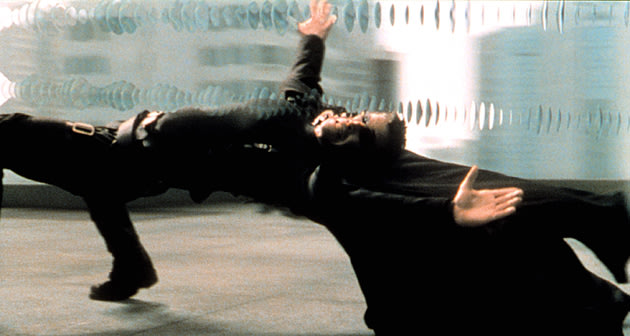
This flippin' bonkers scene from "The Matrix" is brought to you by: IDEALISM!
 One of the most popular action films of all time, "The Matrix" (1999) has been critically acclaimed for its original and captivating story. For those who haven't seen the film, it is about a world in which the "real world" you experience is not actually real. Instead, the entire human populations is plugged into one massive super computer via a prehistoric USB connection in the base of the neck, whilst being suspended in a vat of jelly. This is the general premise of the film and, yes, it makes for some exciting science fiction. If you haven't seen it, I can't recommend it enough because it truly revolutionized the way films are made (the sequels, I could do without).

Though I said this was an original story, it's true that many  philosophers, most notable Renee Descartes, suggested that our senses may not be entirely trustworthy. His philosophy's foundation was to doubt everything and rebuild our rational structure from the certain truths while leaving out the falsehoods, almost like overturning an apple cart of ripe and rotten apples, so as to pick up the good apples and leave the rotten ones on the ground and out of the cart. It was in this process that he wrote the now-famous (or infamous) phrase, Cogito ego sum ("I think, therefore I am") in which he claims to have proven his own existence after doubting it momentarily. (Descartes was pretty hardcore about this doubting thing) But what was truly revolutionary about the Matrix was that with the dawn of the digital age, it put forth a world in which there might be a very good reason to doubt what we see, taste, smell, touch, and hear.

Descartes upset the apple cart and this donkey
Too bad it's all a bunch of nonsense. Though entertaining for a science fiction film to speculate upon, it is purely fictional in its expression of ideas. This may sound harsh, but although philosophy specializes in the exercise of human reason, man is not always fully rational, so he is not always correct in the conclusions he draws. Unfortunately, rational thought has a spotty history, and along the way, many mistakes have been made, leading to the ruin of entire civilizations. Even today, despite our civilization's hyper-intensive focus on the supreme authority of the natural sciences, rational errors are rampant everywhere you look: in religions, in politics, and most certainly in ethics.

Early "pre-philosophical" thought was frequently confused as being rooted in religious beliefs and practices. The human wisdom studied in philosophy was mingled with sacred traditions and practices such that it was no longer rooted in human reason. Rather, it took its foundations in religious traditions of ancient cultures, and not in the exercise of human reason, independent of religion. Essentially, human reason had little or no part in informing the civilization's philosophy.

One such mistake is the concept of dualism, the idea that two eternal and uncreated principles of Good and Evil fight in a never-ending cosmic struggle. It is typically commonly used as an answer to the problem of evil, and was the core belief of the Persian culture, specifically in the beliefs of Zoroastrianism and Manichaeism. The hope was to explain why good and evil are able to coexist in the world; however, the erroneous implication of dualism is that evil is natural to the world, (as opposed to the Christian understanding in which evil is a privation of good). This leads to the conclusion that there are created beings that are evil by their very nature.

 
A musical summary of pantheism as taught/sung in Disney's Pocahontas

The concept of pantheism is another such confusion. Pantheism is the idea that God is comprised of everything in the universe: every being, every substance shares equally in the fullness of the divine being. Problem with this is that there leaves no distinction between creator and creation, and this completely contradicts the obvious multiplicity of distinct and seemingly independent beings. Brahmanism (or Hinduism) is one of the primary culprits of this error, though they go further and explain away the apparent multiplicity by saying that the world is actually an evil illusion (an idea known as idealism) and one must detach from it, striving always to lose one's role in the deceitful multiplicity. Buddhism, an off-shoot of Brahman philosophy in some respects, goes so far as to claim that not only the possession of individuality is an evil, but the very existence of the soul is an evil.

This short account of pre-philosophical errors is by no means exhaustive. We will examine many other errors in thought in future posts, but this will serve for now as a high-level overview of a few of the oldest intellectual errors. The main purpose of our dive into the weirdness of what the human mind can conceive was to prove that though these ideas may be worthy of science fiction, they're not worthy of much else...

Except for this...


 *Adapted from Jacques Maritain's book, "An Introduction to Philosophy" (trans. by E.I. Watkin)

Monday, February 4, 2013

Schedule Killed the Action/Adventure Star

I use Google Calendar every day. It's incredibly handy and helpful, and all my appointments and events are on there. With alerts, I can be reminded of events that I might otherwise forget. I have separate calendars for my different kinds of events (birthdays, fitness training, etc.) The plethora of different views allows me to see my schedule in any way I might (or might never) want.

I hate Google Calendar. And any kind of calendar/schedule-maker that is easy to use. If it's easy to use, people will use it, and with calendars and schedule-makers, that just won't do.

The Face of Boredom
When you have a schedule, you subtly believe you know what is going to happen during your day. You set the events of your day and you move from one appointment to the next, one task to the next, and one pre-planned moment to the next. It's true that society could hardly function without schedules, but it's just a cultural symptom of our obsession with productivity and efficiency.

This is bad for two reasons: First, because your day is "planned", nothing new or exciting can happen. You know the sequence of events (in fact, you have determined most of them). You become the ultimate master of your own destiny and therefore, there are no surprises.

Second reason: how mind-numbingly boring is that? The chief problem afflicting our culture today is not poverty, hunger, or filthy interstate rest stops... it's boredom. When we use a schedule to line up every minute detail of their days, weeks, years, and lives, we perpetuate this heinous evil and rob ourselves of engaging stimulation.

Maybe each day feels the same because they ARE the same.
"Well, what if there is no tomorrow? There wasn't one today."
For most people with schedules, each day feels exactly the same. It's like you know what's going to happen tomorrow. In corporate America, a select few people have truly exciting jobs, but for the rest of us, it can be a drudge. If you're expecting  the same unexciting day as yesterday, what are you looking forward to? Tomorrow will come and go, and you might ask yourself why do you really care?

Maybe we like schedules to feel in control of our lives. In an effort to be certain of as many things as possible, we plan our lives as a sequence of calender events and appointment invites. It's like giving someone a wrapped gift that you picked out. They may have no idea what's inside, but you do. For that reason, there is no surprise for you. Imagine always giving people wrapped gifts and never receiving one yourself.

What is this ultimately taking a toll on? Reliance on schedules negatively affects our ability to be spontaneous and adventurous that romantically invaluable skill. Imagination is the heart and soul of spontaneity. A common error is to believe that one must be erratic or impulsive to be spontaneous. However, it is imagination that gives the human soul the agility to be spontaneous. But there are few things that kill imagination, and consequently spontaneity, more than pre-planning your life and relying on rigid structures. Consequently, we become slaves to our schedules, both self-imposed and imposed from the outside.

Spontaneity also has a profound influence on one's courage. When an unexpected opportunity or challenge arrives, our ability to rise to it will be diminished, just because it does not fit into whatever we expected. Life is meant for action, and courage is what enables us to take appropriate action in any circumstance. Without courage, we miss out on life's rewards. Life is not always pre-canned or predetermined, and the most critical moments in life are usually those ones that are not planned or expected. Most of us don't need to chase after tanks on horseback or stop an alien invasion or escape from an island of genetically-engineer dinosaurs to satisfy our spirit of adventure and test our courage (if you do, you might be a fictional character), but that courage and adventurousness needs to be reclaimed.

Seize the moment. Push yourself to heroics. Do not settle for blindly following the established order, and do not be afraid to throw the schedule out and blaze your own trail!

I'll bet Indiana Jones didn't schedule this... and he turned out just fine.

Saturday, January 5, 2013

Habitual Sins and Contrition

"The Miraculous Draught of Fishes" by Raphael
When one deals with a habitual sin, it can be difficult to arrive at proper contrition. True contrition necessitates that you reject the sin and resolve to never commit it again; however, because of our fallen nature, it is not unlikely that despite our best intentions, we will succumb to temptation and descend into that sin again. We acknowledge this in an attempt to be realistic about ourselves and the situation, but often it gives the effect of despair. The past is gloomy from those sins already committed, the present is dark because we are still committing the sin, and the future looms ominously because this is a habitual sin and the temptation, at least, will most certainly occur again.

What should our outlook be under these circumstances? It is possible the habitual sinner will equate the occurrence of the temptation with the occurrence of the sin itself, assuming the success of the devil’s efforts and an inevitable fall from a state of grace. In this sense, the sinner has already ‘given up’ trying to break the chain of sin formed by habit.

However, the past is only an indication of the trials we will face and not a determination of our future actions. We can certainly look to the past to ascertain the obstacles of the future and even learn from our past failures in terms of what aided us or hindered us from clearing those hurdles.  Though, it is not true that because we have stumbled over the same obstacle again and again, we are incapable of achieving breaks in the chain. It is definitely a slow process and success will be elusive at the beginning, but we must be careful to not assume the devil’s triumph, just because he tempts us.

Therefore, we return to the question of contrition: what should be the elements of our contrition, especially for the difficult case of habitual sins? Peter told Christ, “Depart from me, O Lord, for I am a sinful man.” (Luke 5:8) This certainly seems like despair at first glance, but Peter’s desire to be with Christ is so strong that at his invitation, he leaves everything to follow him. He was so eager to be with Jesus that despite his unworthiness, he was willing to give up all he owned to be with him.

So on the one hand, we must acknowledge our unworthiness; for the slightest sin, much less a habitual sin committed several times, without God’s mercy is enough to damn us to Hell forever. This acknowledgement must not, however, prohibit us from recognizing the profound, all-consuming desire we have for Christ. We may need to apologize seventy times seven times, but we must never cease to proclaim our love for him who loved us so much as to give his life for us. In our sorrow, we must beat our breasts lamenting, “mea culpa” then shout joyously, “Gloria in excelsis Deo!” for His Divine Mercy.

Tuesday, December 18, 2012

The Science of Santa Claus


As a high school junior in physics class, we were released from classes for Christmas break with a short scientific analysis of the plausibility of Santa Claus. I admit, slightly shamefully, I wish I had the personality to be able to come up with these because I really quite enjoy these sorts of reality checks. Alas, I did not come up with this one, but I repost it for your reading pleasure from another website, credited below:

No known species of reindeer can fly. BUT there are 300,000 species of living organisms yet to be classified, and while most of these are insects and germs, this does not COMPLETELY rule out flying reindeer which only Santa has ever seen.
There are 2 billion children (persons under 18) in the world. BUT since Santa doesn’t (appear) to handle Muslim, Hindu, Jewish and Buddhist children, that reduces the workload to 15% of the total — 378 million according to Population Reference Bureau. At an average (census) rate of 3.5 children per household, that is 91.9 million homes. One presumes there’s at least one good child in each.
Santa has 31 hours of Christmas to work with, thanks to the different time zones and the rotation of the earth, assuming he travels east to west (which seems logical). This works out to 822.6 visits per second. This is to say that for each Christian household with good children has 1/1000th of a second to park, hop out of the sleigh, jump down the chimney, fill the stockings, distribute the remaining presents under the tree, eat whatever snacks have been left, get back up the chimney, get back into the sleigh and move on to the next house. Assuming that each of these 91.8 million stops are evenly distributed around the earth (which, of course, we know to be false but for the purposes of our calculations we will accept), we are now talking about .78 miles per household, a total trip of 75½ million miles, not counting stops to do what most of us must do at least once every 31 hours, plus feeding and etc.
This means that Santa’s sleigh is moving at 650 miles per second, 3000 times the speed of sound. For purposes of comparison, the fastest manmade vehicle on earth, the Ulysses space probe, moves at a poky 27.4 miles per second — a conventional reindeer can run, tops, 15 miles per hour.
The payload on the sleigh adds another interesting element. Assuming that each child gets nothing more than a medium-sized Lego set (2 pounds), the sleigh is carrying 321,300 tons, not counting Santa, who is invariably described as overweight. On land, conventional reindeer can pull no more than 300 pounds. Even granting that "flying reindeer" (see point #1) could pull TEN times their normal amount, we cannot do the job with eight, or even nine. We need 214,200 reindeer. This increases the payload — not even counting the weight of the sleigh — to 353,430 tons. Again, for comparison — this is four times the weight of the Queen Elizabeth.
353,000 tons traveling at 650 miles per second creates enormous air resistance — this will heat the reindeer up in the same fashion as a spacecraft re-entering the earth’s atmosphere. The lead pair of reindeer with absorb 14.3 QUINTILLION joules of energy. Per second. Each. In short, they will burst into flame almost instantaneously, exposing the reindeer behind them, and create deafening sonic booms in their wake. The entire reindeer team will be vaporized within 4.26 thousandths of a second. Santa, meanwhile, will be subjected to centrifugal forces 17,500.06 times greater than gravity. A 250-pound Santa (which seems ludicrously slim) would be pinned to the back of his sleigh by 4,315,015 pounds of force.

 From http://www.chainreactionbicycles.com/santaclaus.htm 
My conclusion to all this: it's more plausible that God became man, remaining both fully God and fully man, and that a virgin conceived this child and gave birth to him, all throughout this process remaining a virgin, than Santa Claus existing.


Monday, December 10, 2012

Fight to the Death

A few days ago, I watch the 2012 film, "The Grey", starring Liam Neeson and directed by Joe Carnahan ("The A-Team"). It's the story of a former special forces soldier, now working for oil pipeline company in Alaska/Canada, whose plane crashes in that region leaving only him and a few others as survivors. Together, they must brave the cold, the hunger, and the pack of nearby ravenous wolves that seek to pick the off, one at a time. A quick glance at the synopsis might not interest you immensely (it didn't interest me), but upon seeing the film, it felt more like a horror-thriller film than a boring "Cast Away" survival film. It was a very frightening film, but one, I believe, that offers a happy, through realistic ending with an emotional soundtrack and stunning snow-capped, evergreen visuals to match.

I do not usually cry during films (why should I? I'm a man). I used to just get caught up in the moment of "wow, this is an awesome scene!" and that was the extent of my excitement. But there are a few elements of cinema that, if properly portrayed, bring free-flowing tears to my eyes. One element of which is the notion of fighting to the death. I will not explain exactly how this relates to "The Grey", because I hope that this post will convince you to see an amazing film without giving any revealing details.

A number of films exist in which the "fight to the death" theme exists. A few that spring to mind include "The Lord of the Rings", "Henry V", "Gladiator", "Cinderella Man", and, though no actual fighting occurs, "The Passion of the Christ". It is a concept that is nonexistent in our society because we are so obsessed with immortality and preserving our own lives. The American culture is obsessed with extending life by whatever means necessary. Acceptance of death is considered a disastrous defeat. No matter what the challenge, there is always the hope that there will be a way that we can defeat the threat and still live at the end of it. There has to be a way that we can achieve a "happily ever after" ending where everyone lives, right?


Death comes for us all. Ready or not, it comes for us. People are afraid of death because they do not know what they will find on the other side. It is not a welcome event because if we have lived our whole lives the way we wanted to and not the way we ought to have, then we make a gamble. The unknown of death, whether it be Heaven, Hell, or just oblivion is terrifying to the one without a clean conscience.

When Death does come for us, there is no more running, no more hiding. We have been caught out in the open, ragged and exhausted from our frantic flight and the end is inevitable. What more worthy thing can we do? The film "Gladiator" suggests "Death smiles at us all. All a man can do is smile back".

The only thing we can do is gird our loins and face our darkest terror with courage and resolve. While other men will despair or beg for mercy, a man of true-spirit gathers himself up and stands his ground, despite the challenge ahead. Sometimes, we are afforded a moment of reflection. All options run through our head, and our vain hope that we could make it out of this grim circumstance alive is forever on our thoughts. But after breathing deeply and turning our eyes to our ultimate fate, we realize that there is only one thing to do. At this point, success and failure are irrelevant: our focus has to be on completing the task at hand, mustering all forces of body and soul for this one purpose.

Then comes the moment of clarity. All of the struggle and confusion of this world melts away and there is only one thing that remains: the purpose. It is finally apparent that everything that has happened to you, everything you have endured, everything that has filled you with joy and sadness in your entire life was given to you to prepare you for this moment. Now, what will you do with this precious gift of a single moment? The passengers of United Flight 93 on September 11 knew. There would be no returning from that flight, but they saw past the despair at the end of their own lives. Instead, they held onto the most critical thing to do at that moment, and if they did not do it, who would?

Tuesday, August 21, 2012

"Temptation"

Courtesy of www.toeverytribeblog.com
Temptation
Though they say, “the road to Hell is paved with good intentions,”
None were quite as good as mine.
Though I assured Father I would offend and lapse no more,
I lie, famished, with the swine.
Though my heart, in trials, yearns for your intervention,
To my grim fate, I resign.
Though I lift my eyes to your glory to gladly adore,
I descend to acts, malign.
But though I walk in the dark forest of my own blunders,
In shade, does Your mercy shine.
But though the hounds and vultures of the Netherworld surround,
You lift me to visions divine.
But though hosts of fiends seek to rend my spirit asunder,
My soul is for hands of Thine.
But though every power, terror, horror of Hell, around,
I stay a branch, You the Vine.
Through failure, defect, and fault,
You, My God, my soul exalts.


© 2012 The King's Coffee, All Rights Reserved.


Tuesday, July 31, 2012

Opinion: A "Hobbit" Trilogy?

"The Hobbit" is going to be three movies."
Most people might read this statement and think, "what is a 'hobbit'?" I'm sorry if you're one of those few, but feel free to educate yourself here.

I have several reactions to this statement, and hopefully by the end of this blog post, I will have gotten my bewilderment sorted out and (maybe) have a coherent opinion on this news.

First: why? Why are they making three films out of one book? This strikes me as a stupid money-making marketing ploy. I hate it when Hollywood complicates stuff like this and really ruins good films. Because the creative team here is mostly intact and all the original actors have returned to play their respective characters as needed, this "trilogy" will forever be associated with The Lord of the Rings, which is critically acclaimed as excellent. Whether for good or ill, this will be considered as essentially the same story. So if this goes south, LotR is going to go the way of Star Wars and its 3 prequel films and Jackson will be regarded as just another George Lucas who creates your childhood cinematic loves, (LotR is very much this for me) then once you've reached adulthood, he ruins them by using it to get more cash from you. So this thought makes me angry.

Second, how? The Hobbit is about 310 pages long. This is just a little over half the size of the Fellowship of the Ring... the first book in the series of the Lord of the Rings trilogy! And it's about one fifth the size of the whole LotR trilogy. Somehow, they got it so that the original plan was to make two movies out of the Hobbit. Where are they getting this new material from? Apparently, much of it arises from the appendices listed at the end of the Return of the King (the third book in the LotR series) and in Tolkien's other notes. But unfortunately, alot of this was not published by Tolkien as its own work because it was not complete/finished. It might be mentioned in passing in an appendix, but will Jackson and the crew be able to fully realize Tolkien's vision and tell his story? Or is it just material scraped and scrounged to make a Hollywood blockbuster? I'd say this idea makes me doubtful.

Now, my reaction to this news has also been positive. Peter Jackson has done a pretty good job of adapting Tolkien's work to the screen. And while it may not be faithful to every single little detail written in the books, I think it does a good job of illustrating for the viewer in the span of 10ish hours what Tolkien is trying to say. (if you want any more than that, then I'm sorry, but you're just going to have to suck it up and read the books) So with this in mind, I'm a little curious to see how Jackson pulls it off.

Also, Howard Shore will be composing the music. All three of his scores for the LotR trilogy were stellar (with the scores for the 1st and 3rd films garnering Academy Award wins). So, if anything, the extra film will just produce more beautiful music that I will inevitably be buying. An example of this are the additional Pirates of the Caribbean films. I have only seen the first two sequels, but the music that Hans Zimmer wrote for them complement and expand on Klaus Badelt's decent score for the first film (which I believe that Hans Zimmer also had a strong hand in creating). Regardless, I'd say more music from Howard Shore's interpretation of Middle Earth makes me giddy.

In conclusion, I'd say I'm dubiously furious at Peter Jackson's audacity to make what was a simple bedtime story into 3-film cinematic epic, while still remaining inquisitively enchanted at the prospect of there being more of Middle Earth to see on the Silver Screen.