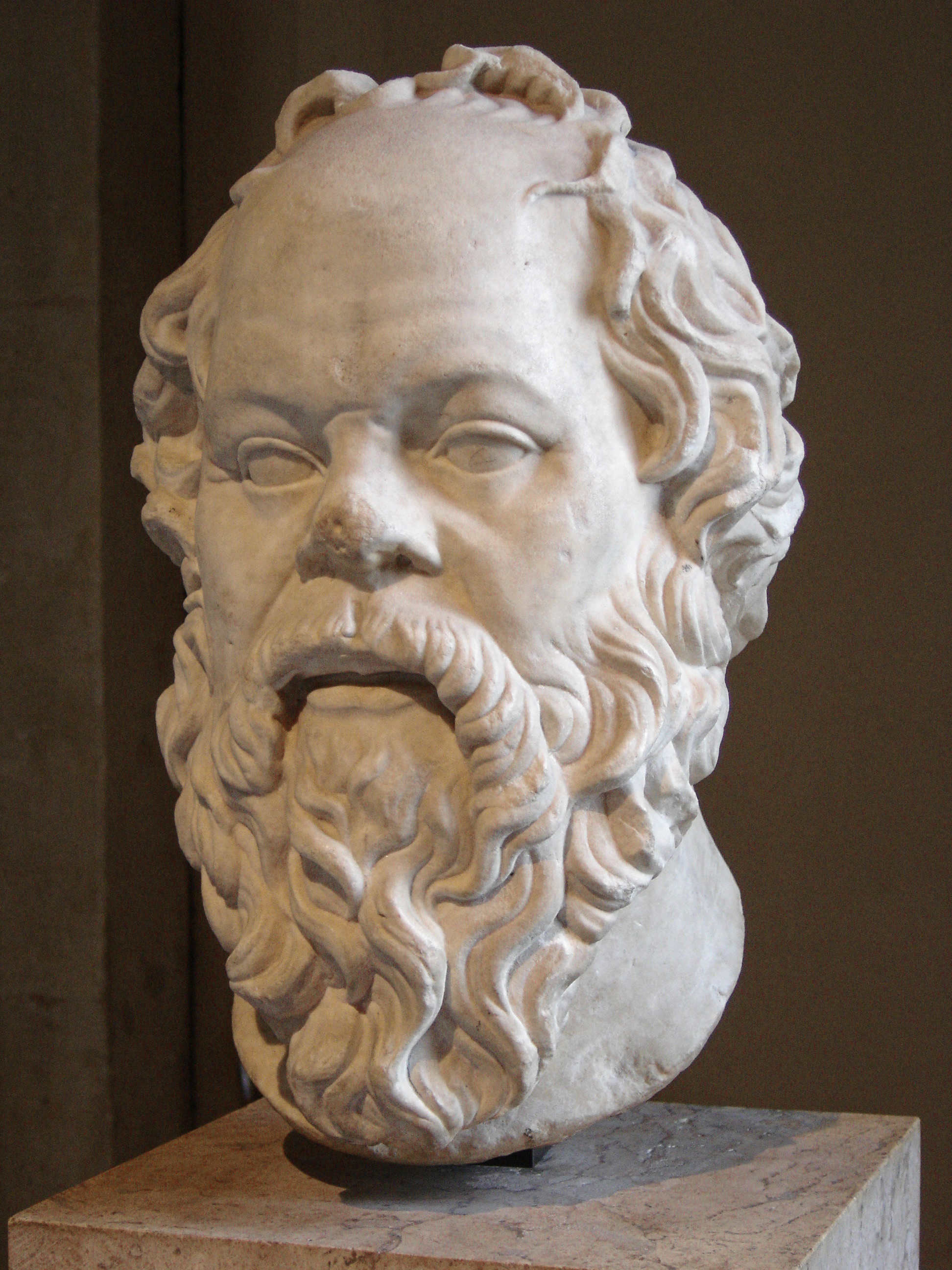
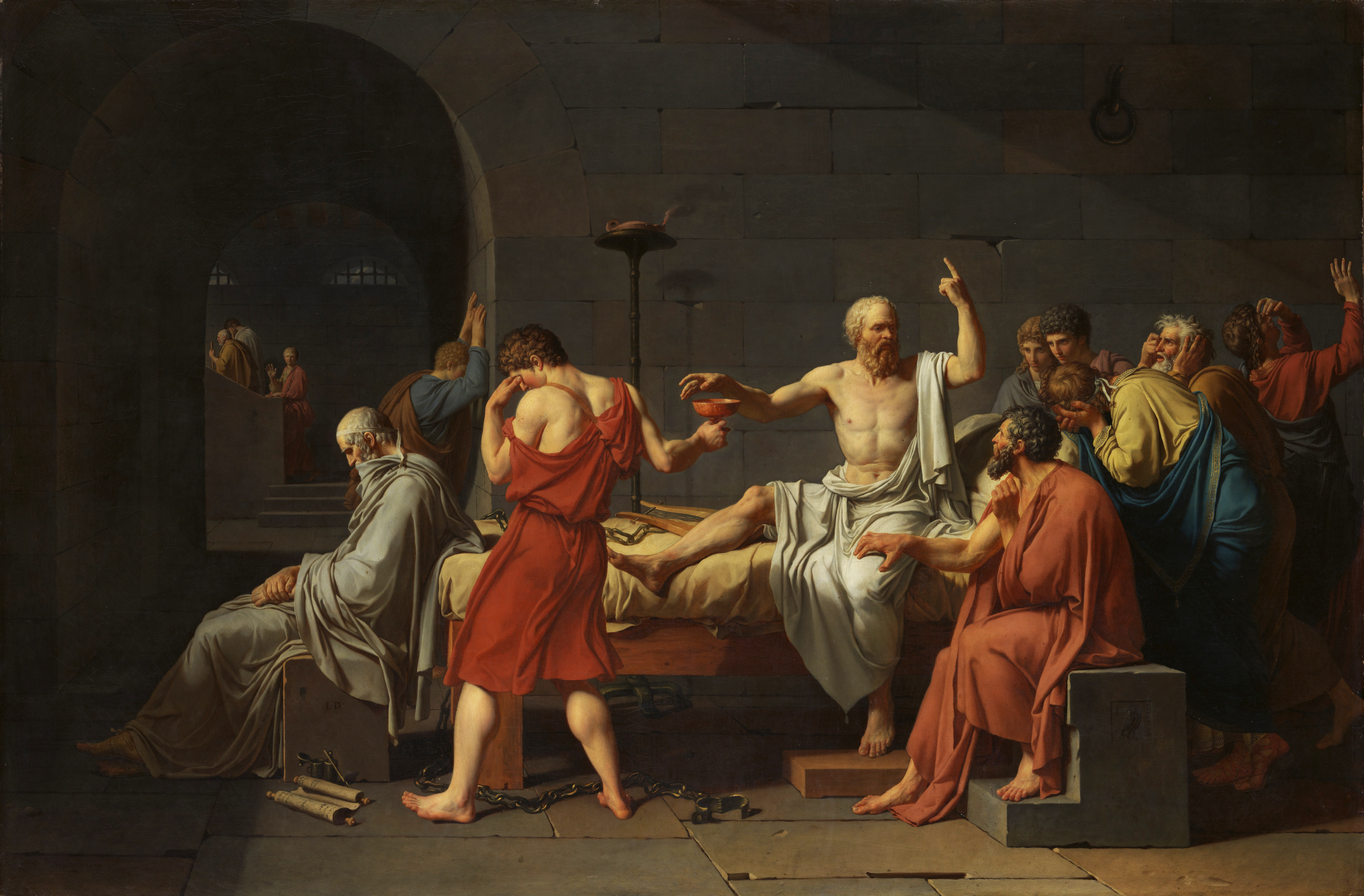
Once more, we return to that most important study of philosophy, and this is indeed one of the more important chapters in our study of philosophical history. Up to this point, we've been discussing and looking into the various erroneous ways of thought from the ancient cultures and religions of the world, as well as the turn towards the reason properly, though misguidedly exercised in the early Greek thinkers. This all culminated in the great thoughts and teachings of Socrates, who would inspire one young student of his to change the scope of the entire study...
 |
| Yes, a "Play-Doh" representation of Plato |
Plato (BC 427-347), student of the eminent Socrates and intellectual giant of his time was now given the torch of Philosophy: the standard of intellectual progress to further the understanding of mankind. Really, this was to be a vast task and not one lightly undertaken and for all this pressure riding on Plato... he didn't do half bad.
As a start, he believed in an ultimately perfect Being. He perceived that the things around him had perfection and imperfections mingled together, so it was not out of the realm of imagination to suppose that there was something after which all perfection was an imitation. This perfect being is the basis, the foundation and source for everything that we see.
Socrates' philosophy, as previously reviewed, is purposed towards determining the essences of things; Plato's thought, on the other hand had the goal of determining perfect ideas of things. For according to Plato, the apprehension of a particular thing's essence is well and good, i.e. what is the essence (or essential qualities) of this glass of Rex Goliath malbec wine that I'm drinking while writing this post, but what about wine as an idea? What is the essence of Wine, the idea? After all, these are universal to everyone. If I tell you I want wine, sure, you might bring me an expensive chardonnay or a cheap merlot, but the fact that with a word, "wine", you understood what I was essentially referring to, this indicated to Plato that there was an idea of Wine that we all shared in and could all comprehend. With this, the nature of wine could be contemplated and we could analyze what it essentially meant to be "wine-like".
 |
| "Plato's Cave" by Jan Saenredam |
Though everything looks good, thus far, Plato's next thought led him off the beaten path and into his first error. He claimed that since these ideas are universal and with the ultimate perfections of these ideas, there must be an eternal archetype of "wine" that exists in the heavenly realm. It is this that we get a glimpse of when we think of the subject, though our perceptions may be imperfect, because the physical representations of this idea around us are imperfect (i.e., all the bottles of wine in the world just don't encompass the perfection of that single ultimate idea of wine). He called these perfect ideas the Forms, and it was the goal of our existence to obtain perfect apprehension of these holy ideas.
 |
| A representation of Plato's Cave by Bryce Haymond |
This led Plato to claim that if perfection is to be found in the heavenly Forms, then the sensible world is to be regarded as a deceptive shadow of reality. This notion is the source of Allegory of Plato's cave. In essence, the citizens of the cave are chained the floor and are unable to look anywhere but the cave wall straight ahead, upon which is projected the shadows of characters and animations from a backlighting fire (similar to the notion of "shadow puppets") The sensible world, therefore, is only a crude representation of the truth, and a soul is meant to leave the cave and walk into the sunlight and see the world as it truly is.
So if these ideas, these perfectly divine Forms are what reality is all about, how do we have them in our heads? Certainly we didn't obtain them from our sensible experience of the world because the objects of this perception are imperfect. Plato claimed that we had previous knowledge of these ideas before our incarnation, and with our birth, our physical bodies and perceptions obscured these truths. He also subscribed to the mistaken belief (shared by the Brahmanist) of transmigration of the soul from one body to another after death.
Ok, so if we're honest, Plato is beginning to sound a bit hokey. Wine, shadow puppets, and transmigration? Sounds like a bad children's bedtime story. Though it would not be accurate to say that Plato completely dropped the ball with the intellectual inheritance that to which he was entrusted, he did screw up quite a bit and a more complete and accurate philosophy would be need to be built on Plato's good ideas before we could call it a day.