Showing posts with label inductive reasoning. Show all posts

Sunday, October 12, 2014

We Really ARE Conscious!

To date, I haven't written anything reactionary; however, it's also important to accept that truth does not exist in a vacuum, hence the reason for this post. The subject of debate is the opinion article in the New York Times entitled, "Are We Really Conscious?" written by Princeton-educated Michael Graziano PhD (in neuroscience) and currently an associate professor at his alma mater. His psychology work is just one part of his CV, which also includes 3 literary novels, children's books, and symphonic works.

While I haven't delved into these works to discover their merit, I think his most recent work in the New York Times is ‘more of the same’ when it comes to the sophistry of the modern academic sciences. While I certainly cannot hope to refute his claims on grounds of neuroscience (his expertise), I must demonstrate a number of fallacious assumptions made on logical and philosophical grounds (my expertise).

To summarize the opinion, Dr. Graziano is presenting his "attention schema" theory of human consciousness. The theory begins by defining two terms:

attention: a physical phenomenon
awareness: our brain’s approximate, slightly incorrect model of our attention

The example he uses of the theory in practice is our perception of light. The wavelength of the light is the true attention of the light, or in his words, "a real, mechanistic phenomenon that can be programmed into a computer chip." The occurrence of the light, therefore, is something entirely quantitative, whereas our brain creates the "cartoonish reconstruction of attention" that we know as 'color', which is our awareness. While the quality of color has been assumed to be only a construct of the human mind since the Enlightenment philosophers, science has proven that white light is actually comprised of light with many different wavelengths, meaning that light is comprised of many (in fact, all) colors. Therefore, the attention is that data of many wavelengths/colors and the awareness is what we'd mistakenly call "white light".

What does this have to do with consciousness? Dr. Graziano equates our brains as informational storehouses, like computers, whose sole purpose is to retain and process information. The subject of consciousness arises when faced with the difficult question of why the brain would inefficiently waste energy on defining itself as something separate from its surroundings and be aware that its experiences are subjective. He then presents his attention schema theory to explain consciousness as a rude approximation of the information it processes, similar to how white light is only an erroneous estimation of all colors together.

However, a critical look at Dr. Graziano’s distrust for our intellect reveals a misplaced trust in the inventions created by our very own intellect. (I will, for the purposes of this post, roughly equate Dr. Graziano’s term ‘awareness’ to the term, ‘intellect’, because it is our intellect with which we interpret the information received from our senses) Our intellect was the creational source of the computer, the camera, and the spectrometer; these human inventions are as limited in their design as their poor human inventors. Returning to Dr. Graziano's example of the computer chip, it is our intellects that program that computer chip to recognize wavelengths. They do not function any different than how we designed them to function, and if they see phenomena that we don’t, it is only because we possessed the intellect to speculate that phenomena’s existence.

Even the scientific terminology used by Dr. Graziano is a creation of the human intellect of which we should be skeptical. Pre-modern science, we created the vocabulary of ‘green’ and ‘white’ light because those are the terms we used to describe the phenomenon of different kinds of light. With modern science, we created the vocabulary of ‘495 nm < λ < 570 nm’ and ‘390 < Σλ < 700 nm’ to describe the exact same phenomenon. Both vocabularies are constructs of our own intellects, intended to conform to an external reality and differentiated only by their specificity. And still, our scientific expression is limited by the understanding of our intellect. Just as Newton’s theory of gravitation was not the final word, so too many of our other constructs of intellect (i.e. the color of light, the wavelength of light, etc.) will be overturned again and again as our intellect struggles to grasp the natural cosmos. So in this sense, we cannot escape from our own intellect!

These were the words chosen by Dr. Graziano, but for the sake of argument, we can assume that Dr. Graziano oversimplified his definition of 'attention' for the benefit of the reader. An alternate understanding may be the true nature of the phenomenon itself that is unknown to us at the time. For example, before Newton, scientists did not yet realize that white light was comprised of all colors of the visible spectrum and they their combined wavelength creates white light. Now, let's suppose that this is the correct understanding of light as it really is (meaning, that this is what white light essentially is, and no further modification to our electromagnetic theory will be ever necessary). This makes the definition of attention to be independent of anything man-made.

But even with this understanding, Dr. Graziano still commits two debilitating errors: one logical and the other epistemological. The logical error, being the more rudimentary, we will examine first. Dr. Graziano uses man’s mistaken postulate that white light is purely a single color to cast doubt over the existence of man’s consciousness. He uses the erroneous attribution of quality of one thing to demonstrate the erroneous attribution of existence to another. As with the popular saying concerning "apples and oranges", this is not a logically coherent analogy. Basic logic instructs that attributes are predicates of the subject. For example, the statement, “White light is not a single color” has ‘white light’ as the subject, and “not a single color” as a negative predicate attributed to that subject. However, it would be absurd to say, “White light is NOT” or rather, “White light does not exist” because obviously the phenomena of unified light does exist or else we would not be theorizing about it. The equivalent would be to first claim, “Gravity is not a kinematic force,” (which is predicted by theory and has been supported by repeated experimentation) then to claim, “Gravity does not exist,” after which, to test this claim, one must simply jump off a 10-story building to realize his error. Dr. Graziano assumes that existence is an attribute that we associate with a thing, like the green color of grass (or photosynthesizing chlorophyll, if we want to be scientifically accurate). He then carries his error with him in the analogy to the existence of one’s consciousness, mistaking attribute for existence and proposing a comparison that fails under the scrutiny of logic.

At a deeper philosophical level, Dr. Graziano also mistakes the object apprehended by the intellect to be scientific fact. Rather, the immediate object of our intellect is ‘being’ per se and not the quality, quantity, or any attributes whatsoever. The intellect, guided by the light of Reason, apprehends the existence of phenomena with certainty. While it is historically true that our intellect mistakenly believed that white light was unique from green light (and not composed of all colors), our intellect remains certain of the existence of the phenomenon that we describe as ‘white light’.

Therefore, acceptance of Dr. Graziano’s theory serves only to submerge the reader beneath the quicksand of his initial premise: skepticism. Doubt in our own intellect undercuts the vast expanse of theories and hypotheses that comprise the natural sciences, not to mention our very rational existence. Any honest intellect that chooses to accept this initial premise must commit intellectual suicide, and make vegetables out of their own mind.

To the contrary, a disciplined intellect is the cause of truth in the mind, though truth is by no means easy to obtain. It is with great difficulty that we arrive at truth. Therefore, while misuse of one’s intellect results in error, well-reasoned and careful application of the intellect yields the fruit of certain truths.

Sunday, April 14, 2013

The Highest Human Science: I. Introduction

Jacques Maritain
This is a post from the series, "The Highest Human Science". Click here for a complete list of all posts in the series.

In 1917, the French Catholic philosopher, Jacques Maritain, wrote in his Elements de Philosophie (Introduction to Philosophy) that "philosophy... is the sovereign science. Therefore, it is competent to judge every other human science, rejecting as false every scientific hypothesis which contradicts its own results." By this, Maritain is claiming that every other human study which is governed by reason is ultimately subject to the study of reason itself, which is none other than philosophy.

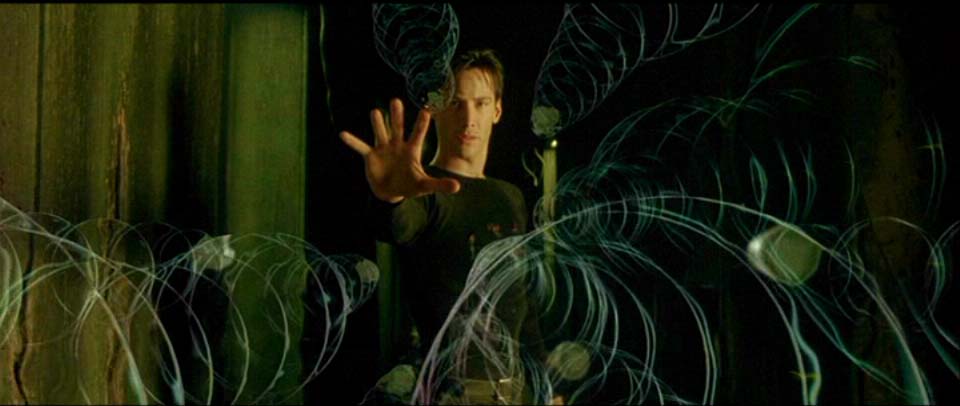
In today's culture, philosophy is seen as boring, a joke, or as excellent screenplay material for the latest science fiction films, such as "The Matrix" and "Minority Report". In liberal arts universities, it's a core requirement, though the reason why it's a requirement is often forgotten. It appears, more often than not, that philosophy is included in these curriculums to simply make students aware of many different way to view the world, but without any guidance as to which ones should be taken seriously and which ones should be discarded into the dump heap of nonsense.

But this is to completely miss the point of philosophy, and Maritain demonstrates the correct understanding with the statement I just quoted above. In the modern desire for self-autonomy, each human study (he uses the term "science", but to distinguish from the strictly natural sciences, I will use "human study") has claimed sole authority over every aspect of its domain. In the case of fine arts, artists have defined their work as self-expressive and reflective of subjective passions or ideas. They no longer seek to inform themselves of what "good" art consists and instead determine that it must be anything and everything that comes from the artist, a classically self-absorbed notion that is typical of the vain. 

The Matrix: because the "bullet stop" trick just isn't possible without philosophy
In other cases, some studies not only claim complete dominion over their subject matter, but plot to overthrow the authority of other fields of study. The natural sciences (biology, chemistry, physics, etc.) assert that their studies directly nullify the authority that theology possesses over its subject matter, such as using scientific evidence to disprove the existence of God. Psychology and many other social sciences, have also been hijacked by this mentality, using wildly inappropriate extrapolative methods to reduce the immaterial, yet real human soul to nothing but determinate chemical interactions in the material organ of the brain.

Human studies need authority to guide them in the right direction. If they can be held accountable to no authority, then the study will contradict itself and break down into nonsense. Philosophy is primarily concerned with the study of human reason, therefore it establishes the infrastructure that makes every other study possible. For example, the scientific method is based on a form of logic (philosophy's domain) called "inductive reasoning". It's a very powerful short hand method of reasoning, but it remains fatally flawed in the sense that no matter how many times you verify your hypothesis, you cannot guarantee with 100% certainty that it is correct.

So why do we study philosophy? We study philosophy because it is solely devoted to the study of human reason, and since every human study is based on human reason, philosophy has it's "fingers in every pie", so to speak. Though it allows physics to judge its own study by principles of physics, it is responsible for wielding authority over the principles of philosophy on which physics and every other human study depends. It keeps the other studies "honest" in their intellectual endeavors and acts like referee in in interdisciplinary disputes.

Though knowing philosophy won't make a student an expert in any one field of human study (except maybe philosophy), it empowers the student to judge the validity of a study's conclusions. In conversation, the student of philosophy can participate in any study, and armed with the understanding of the very infrastructure of human reasoning, he can independently judge and remain intellectually critical of every other study. By "intellectual criticism" I'm not talking about snobbish remarks or obnoxious policing, but there are many fields of human study that are largely without a formal education in philosophical principles, so they make all kinds of logical errors in their study. The student needs to be able to actively discern the truth of a conclusion reached in a study and judge whether or not this agrees with reason.

That is why I have begun this series, entitled "The Highest Human Science". I will be drawing most of the source material from Maritain's "Introduction to Philosophy", which is an excellent guide to understanding the basics of philosophical study, but there will occasionally be other sources sprinkled here and there as we go. Stay tuned into the blog for upcoming posts in this series! I end this introduction post with one of the most crucially informative philosophy videos ever.


*Adapted from Jacques Maritain's book, "An Introduction to Philosophy" (trans. by E.I. Watkin)

Sunday, August 12, 2012

Finding Nemo and the Wonder of Discovery

Finding Nemo
My favorite Pixar movie is "Finding Nemo". I know, everyone from my generation would probably beat me senseless over such blasphemy because my favorite Pixar film should be "Toy Story". (actually, I might like "Toy Story 2" better than the first one; double blasphemy!) It might be because it's been years since I've seen either of the two first Toy Story films, but nonetheless, "Finding Nemo" finds itself at the top of the list. And why not? It's a visually beautiful film, Thomas Newman's score is soothingly serene, and where else would you learn that clown fish aren't really that funny?

But I like it for a different reason. Yes, I'm typically attracted to visually appealing films and pretty soundtracks, but this film had re-awoken something in me that few other films have touched upon: my inner boyhood.

No sooner had the film finished than I was on YouTube, clicking through National Geographic videos of marine life (especially whales), reigniting my boyish curiosity and wonder. The diversity of the multitudinous marine species was astounding to me, even now.

The instructional drawing book my
mother gave me in 1st grade.
As a boy, I was a science nerd. Anything I could get my hands on, I'd just eat up whatever knowledge I could. Ocean wildlife, though one of many topics, was definitely one of my favorites. I dreamed of becoming a marine biologist and working with undersea creatures.

This got me to thinking. Throughout my liberal arts education, I've become painfully aware of the havoc wrought by the modern era. To be fair, there have been some excellent technological advances in the modern age, but to also be fair, there have been some fatal errors in thought that have brought about many modern-day horrors (the Holocaust, moral-relativism, communism, etc.) The one that quickly came to mind was the scientific method.

The scientific method is based on the notion of inductive reasoning, which takes individual observations, makes a general statement (hypothesis) about them, then creates an experiment to test the statement. If properly used, inductive reasoning is a powerful tool for science. This is primarily what is meant by the Scientific Revolution of the Renaissance. It is true that human innovation and technology have advanced more in the past 500 years than in any given 500 years in recorded human history. And it may be true that the power of inductive reasoning is to be given credit for this. However, with the expansion of man's ability to innovate has also come the expansion of man's insatiable desire for material things.

It's not wonder that technological engineering has become the religion of the world. Material gods such as the iPhone, the personal computer, the Blu-Ray, the social network, the feeding of the world's hungry, and even the cure for cancer have driven science to fulfill our material needs. I do not despise the iPhone/computer/Blu-Ray/social network (I possess all four) or ending world hunger/curing cancer. These are not evils in themselves, but they certainly are what we make of them. (and yes, I believe that even the search for a cure for cancer can be corrupted by our desire to cheat death) At the end of the day, the modern world asks of science, "Does it make life easier?"

When was the last time we did something just because we wanted to satisfy our wonder and curiosity? Inductive reasoning tends to rob us of our natural wonder and awe because we hope for results we've already predicted in a hypothesis. We've forgotten that part of ourselves that is always seeking answers; the inquisitive little boy or girl in all of us.

Maybe it isn't science that you're curious or inquisitive about. Maybe you grew up wanting to be a famous artist, and now you're a marketing major or working for a graphic design firm. Or maybe you loved learning about history and ancient cultures, and now you're a politician or a lawyer. Or maybe you are like me, growing up as an inquisitive junior scientist and mathematician, but now you're an engineer or a doctor. If we allow it, we can lose our curiosity.

And is life worth living if we ignore our questions? Yes, our curiosity is insatiable and that's one of the things that makes us human, but feeding that desire fills the soul with wonder. It enables us to see past ourselves and our wants/needs and draws our focus to see the world as it really is: filled to the brim and overflowing with spectacles and amazement unparalleled by any other. Whether it's the depth of space or the ocean, the thick rain forests of South America or the grassy savanna of the African plains, the changes in the weather or the changes in the nucleus of the atom in a nuclear reaction, the world is full of natural wonders to be marveled at.

And return to that innocent inquisitiveness is possible. We can learn things, solely for the sake of knowing and satisfying that curious little boy or girl inside. Just begin by asking yourself: how old are sea turtles?